Houston Area Pediatric Specialists

Independent pediatric specialists aim to serve our community. We want to share news and analysis regarding our specialties and our practices.


Showing posts with label insomnia in children. Show all posts

Wednesday, March 19, 2014

Losing Sleep Could Kill Brain Cells

This study was conducted in mice, looking at markers that predict injury to neurons.  If the same phenomenon is present in humans, it might change our sleep habits.  Dr. Susarla 
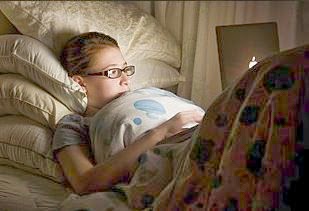
Losing Sleep Could Kill Brain Cells

Late-shift workers, students and other night owls take note –  a new sleep study from researchers at the University of Pennsylvania has shown for the first time that extended periods of sleeplessness can lead to irreversible brain damage. 
While previous studies have shown cognitive performance declines after sleep loss, the latest research challenges the long-held notion that a "sleep debt" could be recovered by makeup rest. Researchers at UPenn and collaborators at Peking University have found extended periods of wakefulness actually kill some neurons and cause damage to others. 
Scientists knew there were certain neurons in the brain stem that are awake when we are awake and "sleep when we sleep," says Dr. Sigrid Veasey, a study author and professor at UPenn's Perelman School of Medicine. 
“This gave us an indication that maybe [the cells] needed their rest,” she says. “We hypothesized that the cells that were going to be the most likely to get injured would be some of the cells that are active during wakefulness.”
These particular neurons located in the brain stem are critical to attention, cognitive performance and also play a role in determining one’s mood.
“So if there’s an injury to these neurons, then you may have poor ability to pay attention and you might also have depression,” Veasey says.
Veasey and her colleagues used a mouse model to explore the impact of imposed wakefulness on mice’s brains. They separated mice into three groups. One group was allowed sleep as usual, another group was kept awake for three additional hours during their normal sleep period in a space outfitted with "play" items – wheels, toys and other mice. A third group of mice was kept awake in a similar environment during their normal sleep period for an additional eight hours, for three days.
Humans and other mammals share these same neural networks, so looking at wakefulness in mice is a good proxy for understanding the sleep habits of humans.  
“There’s every indication that they function the same way,” says Veasey.
After procuring brain tissue from the mice, researchers found an increase in the amount of a protein known as SirT3, that protects these "wake-active neurons" from damage among the mice who were kept from sleeping for shortened periods, but the mice who were kept awake for extended periods did not show any increase in this protective protein. Researchers also found a 25 to 30 percent loss of neurons and an increase in what’s known as oxidative stress in the extended wakefulness group of mice. This stress causes the proteins inside these neurons to fold on top of each other and can prevent them from communicating with other neurons. Some of the mice had a genetic deletion which stopped them from producing this key protein. Those mice also incurred damage to these sleep-sensitive neurons, even with only short-term sleep loss. 
“So really the cells that are remaining just don’t function well,” says Veasey.
The results of the study emphasize the critical importance of sleep, says Veasey. 
“You can push the system a little bit, but you can’t push it too hard and for too long or you’ll have irreversible consequences,” she says.
For students, academics and other professionals looking to gain an edge, Veasey says, “You’re at a time in your life when you really have to pull a couple of all-nighters to sustain that edge academically or professionally, but by cutting our sleep times short then do we end up losing that edge in the long term because we lose those neurons that are so critical for attention?”
Veasey says while she can't repeat this study in humans, there is certainly room for more research.
In addition, having learned the critical importance of this protective protein SirT3, researchers believe that it could provide avenues for new treatment.
"If we can show that we can protect the cells and wakefulness, then we're launched in the direction of a promising therapeutic target for millions of shift workers," said Veasey in a press release.
Future studies could use brain imaging techniques to look at people with sleeping disorders to help researchers better understand the damage that's incurred through sleep loss.
The study was first published Tuesday in the Journal of Neuroscience.

Friday, January 4, 2013

Asthma, Insomnia Make Each Other Worse


One of the reasons asthma can present insidiously is it may manifest more at night.   You may not awaken with obvious symptoms of breathing problems, but sleep is disrupted enough to affect daytime function.  This is a problem I see frequently in children and adolescents.  Parents are often surprised to see how effective treating asthma can be at improving sleep quality.  Dr. Susarla

Asthma, Insomnia Make Each Other Worse


If you experience breathing problems, you might need to actively treat those symptoms, or you could find that you’re being kept awake at night. According to a recent Swedish study, asthma sufferers are far more likely to suffer from insomnia than others.
The trial was a large one, with data collected from 25,610 adults in four Swedish cities. The participants were given a questionnaire that asked questions about insomnia, asthma, rhinitis, weight, height, tobacco use, and physical activity. For the purposes of the study, the researchers defined asthma as taking current medication for the condition or experiencing at least one asthma attack during the last 12 months. Of the 25,610 participants, 1,830 people were defined as being asthmatics. Here’s what the researchers found when they compared asthma and sleep quality:
• The prevalence of insomnia symptoms was significantly higher among asthmatics than non-asthmatics
• For those with nasal congestion and asthma, insomnia symptoms were worse
• The risk of insomnia increased with the severity of asthma
• Asthmatics who had three or more symptoms were more than twice as likely to suffer from insomnia
• Nasal congestion, obesity, and smoking also increased the risk of insomnia
Insomnia is a common problem among asthmatics. The researchers concluded by saying that asthmatics should treat their symptoms, including nasal congestion, to make sure that they get a good night’s sleep. Other lifestyle factors, like smoking and obesity, will also increase your chances of suffering from insomnia if you’re an asthmatic.


Read article here.

Friday, October 5, 2012

Teens who use mobiles after 'lights out' may struggle with sleep, depression


Bright mobile phone screens can disrupt sleep which in turn may contribute to mood disorders such as depression.  Dr. Susarla


Teens who use mobiles after 'lights out' may struggle with sleep, depression


Published in the October issue of the Journal of Pediatric Psychology , researchers found a link between teens who used mobile phones after they went to bed and poor mental health and suicidal thoughts compared to those who did not use their phones at this time of night. The researchers controlled for other factors, including alcohol and drug usage. In the study, researchers investigated nearly 18,000 children in junior high and high schools in Japan, with subjects answering questions about their mental health, in addition to sleep and mobile phone habits. The study follows prior research that finds poor sleep is associated with mental problems in teens. For example, a study published last year in the Journal of Psychiatric Research found teens who had difficulty sleeping were at an increased risk for suicidal thoughts. Additionally, Rensselaer Polytechnic Institute's Lighting Research Center in the US found that looking at the backlit screen of certain electronic devices can suppress melatonin, a hormone produced during sleep, and cause sleeplessness. This study was published recently in the journal Applied Ergonomics.


Sunday, September 23, 2012

Using iPads before bed 'can lead to a poor night's sleep'

We all love them.  Unfortunately, these bright LED screens can interfere with our brain's cues that signal sleep onset.  Dr. Susarla


Using iPads before bed 'can lead to a poor night's sleep'

Using tablet computers like Apple’s iPad and Samsung’s Galaxy Note just before bed can lead to a poor night’s sleep, according to research.


More and more people are taking their tablets to bed with them to surf the web, check Facebook or email before switching off the light.
But researchers are warning that the blueish light their screens emit can stop users getting a good night’s sleep.
That is because this type of light mimics daylight, convincing the brain that it is still daytime.
Blue light suppresses production of a brain chemical called melatonin, which helps us fall sleep. This is because our brains have evolved to be wakeful during daylight hours.
By contrast, light which is more orange or red in tone does not suppress melatonin production, perhaps because our brains recognise it as a cue that the day is ending.
However, because mobiles and tablets are by nature portable - not to say addictive - more people are taking them into the bedroom.
Users also tend to hold them much closer to their eyes than a computer or television screen.
Researchers at the Lighting Research Centre, at the Rensselaer Polytechnic Institute in New York, are warning that looking at tablet displays for more than two hours “leads to a suppression of our natural melatonin levels as the devices emit optical radiation at short wavelengths” - in other words, they emit bluer light.
They say: “Although turning off devices at night is the ultimate solution, it is recommended that if these devices are used at night displays are dimmed as much as possible and that the time spent on them before bed should be limited.”
They drew their concludions after measuring melatonin levels in 13 volunteers, after they had spent time viewing iPads at full brightness at a distance of 10 inches, for two hours.
Melatonin levels were significantly lower after they had done this, than they were after the volunteers had viewed their iPads for the same time, but while wearing orange glass goggles, which cut out the blue light.
They wrote in the journal Applied Ergonomics that tablet makers could "tune the spectral power distribution of self-luminous devices" so that they disrupted the sleep patterns of users less.
It is not just a good night’s sleep that could be jeopardised by too much late night screen time.
Researchers know that persistent disruption to sleep patterns can lead to an increased risk of obesity, and even breast cancer.
However, these studies tend to be comparisons of those with chronic sleep disruption, such as long term shift workers, with those who have normal sleep patterns.