Houston Area Pediatric Specialists

Independent pediatric specialists aim to serve our community. We want to share news and analysis regarding our specialties and our practices.


Showing posts with label methodist concussion center. Show all posts

Tuesday, August 23, 2011

5 Things Athletes should know about concussions


5 things athletes should know about concussions


As summer comes to an end, thousands of young athletes head back to the field for football, cheerleading and other sports. And the question is posed – who is paying attention to their heads?

The bad news: there are approximately 3.8 million sport and recreation-related concussions in the United States each year.

The good news: Texas law (as of Aug. 1) now requires school districts to make sure children get the standard of neurologic care required to limit the long-term damage concussions can impose.

According to the new law, districts must establish a “concussion management team” that includes at least one physician, and any student-athlete showing symptoms of concussion must be removed from competition and not may not return until evaluated by the physician and at least one other member of that team.

The University Interscholastic League threw in its two cents to the law by adding a rule that also went into effect Aug. 1 stating that high school athletes competing in a University Interscholastic League-sanctioned sport are no longer allowed to return to games or practices on the same day they are injured.

“Concussion is a mild traumatic brain injury,” said Dr. Joshua Rotenberg, pediatric neurologist and neurologic medical director of Texas Medical and Sleep Specialists, in a press release.

“While the state guidelines are excellent and exceedingly important,” he added.

“They don't replace a parent's keen eye and gut intuition. Parents need to know what to look for and what to do if a child is injured during a game on or off the field.” Rotenberg offered the following tips to identify and properly treat this type of traumatic brain injury.

Remove the athlete from play. Look for signs and symptoms of a concussion if your athlete has experienced a bump or blow to the head or body. Early brain and body rest will speed recovery.

Know the signs and symptoms of a concussion. Some of the common symptoms children, teens and young adults may experience include, but are not limited to:

Appearing dazed, stunned or confused

Forgetting sports plays

Moving clumsily, slowly or hesitantly

Answering questions or thinking slowly

Loss of consciousness

Inability to recall events before or after the hit or fall

Headache or “pressure” in head

Nausea or vomiting

Double or blurry vision

Sensitivity to light and noise

Be proactive. If you notice changes in behavior, seek immediate medical attention. You can't see a concussion and some athletes may not experience symptoms until hours or even days after an injury.

Follow a step-wise process prior to returning to play. Although most concussions are mild in nature, it is still important to proceed with caution. Consider having your child evaluated by a specialist in all aspects of head injuries.

Don't dismiss too quickly. Post concussive syndrome, which may include headaches, dizziness and sensitivity to light, can last for up to a year or more after the injury and is not associated with the severity of the initial injury. If these persistent symptoms appear immediately or weeks or months after the injury, take your child to see a specialist.

According to Rotenberg, most people with a concussion will recover quickly and fully. But for some people, the signs and symptoms of concussion can last for days, weeks or longer.

Because some neurologic abnormalities can only be detected by specialists, Rotenberg said pediatric neurologists might recommend a neuropsychological evaluation in addition to a specialized neurologic examination.

Texas Medical and Sleep Specialists may be reached at 249-5020 or www.txmss.com for more information.


Read more: http://www.mysanantonio.com/community/north_central/news/article/5-things-athletes-should-know-about-concussions-2137398.php#ixzz1VulJzD73

New Concussion Law in Texas


http://lonestartexasnews.com/New-Concussion-Law/10511955

New Concussion Law

As high school football practice gets underway--a new rule is in place designed to protect teenagers against concussions.Under the law that took effect Monday, coaches are required to take players out after a head hit to check for a concussion. Neurologist Joshua Rotenberg says that's because concussions aren't obvious and players don't want to admit they're hurt. He adds that sometimes players think they feel okay only to have the effects of a concussion be obvious minutes or even hours later.

Sunday, August 14, 2011

At Last, Football Faces Concussion Problems Head-On

Post by Dr. Rotenberg...

August 14, 2011

The NFL got back to the playing field this past week for its first preseason games since the players and owners agreed to a new collective bargaining agreement. But the scene at NFL training camps is a bit different this year.

New rules now limit the amount of full-contact practice that players can participate in. Gone are the grueling summer two-a-days.

These rules were put in place to address growing concerns about player injuries, concussions in particular. Medical research suggests that the bone-crunching hits that energize fans have serious health consequences for players long after they hang up their pads.....

listen here...

http://www.npr.org/2011/08/14/139621182/at-last-football-faces-concussion-problems-head-on

My Concussion - Be Nice To Your Brain


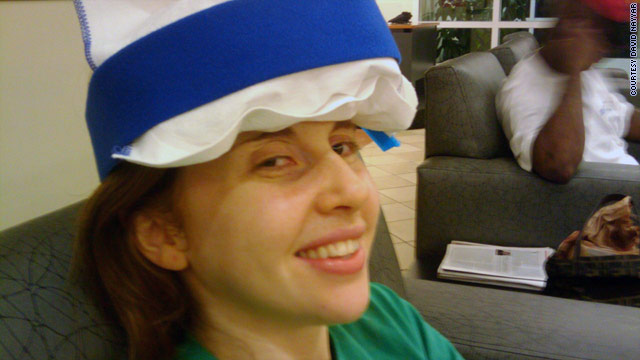
Elizabeth Landau is a writer/producer for CNN.com. This is her story of recovering from a concussion.

I write about health issues every day but I honestly thought that concussions happened only to football, soccer and hockey players. Since kickball is the only sport I play competitively - and there's an obvious limit to how cut-throat an adult kickball game can be - I never considered that a serious head injury would happen to me.

But at kickball in mid-July, I was standing in my usual less-than-important position in right field when the other team's kicker sent the ball flying right toward me. Excited to be useful, I jumped to catch it. Unfortunately, so did one of my teammates, according to my friends who watched in horror.


http://thechart.blogs.cnn.com/2011/08/02/my-concussion-be-nice-to-your-brain/comment-page-2/#comment-221197

Saturday, April 23, 2011

To avoid concussion rules, some players sandbag their baseline tests

Why is a comprehensive neurologic evaluation important after a concussion?

As physicians we treat people and not tests. Tests provide supportive data that quantify deficits. If you game the test or use non-standard testing conditions, the data can be flawed.

Dr. Rotenberg

To avoid concussion rules, some players sandbag their baseline tests

NFL players are given tests to determine their baseline brain functioning so that if they suffer a concussion, they can be held out until they return to their previous levels. But NFL players often don’t want to be held out after they suffer a concussion. And that may lead to some of them intentionally doing poorly on baseline tests.

http://profootballtalk.nbcsports.com/2011/04/22/to-avoid-concussion-rules-some-players-sandbag-their-baseline-tests/