Houston Area Pediatric Specialists

Independent pediatric specialists aim to serve our community. We want to share news and analysis regarding our specialties and our practices.


Showing posts with label asthma attack. Show all posts

Monday, April 17, 2017

STUDY FINDS PREVALENCE OF INSOMNIA IN PATIENTS WITH ASTHMA

Declining lung function may occur routinely due to sleep physiology, making already marginal asthma worse. Dr. Susarla

A recent study found a high prevalence of clinical insomnia in individuals with asthma. In addition, the study also determined the effects of insomnia on the well-being, asthma control, and asthma-related health care utilization of patients. Researchers concluded that insomnia is highly prevalent in individuals with asthma, and those with insomnia experience adverse health effects and are at risk for not having well-controlled asthma.
A team of researchers, lead by Faith S. Luyster at the University of Pittsburg, studied the prevalence of insomnia in patients with asthmas to determine its association with asthmas and the health of the patient by using the Insomnia Severity Index, Asthma Control Test, Asthma Quality of Life Questionnaire, and Hospital Anxiety and Depression Scale. The study collected data from 714 participants confirmed with asthma and enrolled in the Severe Asthmas Research Program III.
Researchers identified insomnia in 263 participants (37%). Insomnia in patients increased their risk for not having well-controlled asthma by 2.4-fold and their risk for asthma-related health care utilization by 1.5-fold in the past year compared to patients without insomnia. Patients with insomnia also showed higher levels of anxiety and depression, as well as poor quality of life.
While patients with asthma commonly report sleep difficulties, the relationship between asthma and insomnia is unknown. The researchers concluded, “Insomnia is highly prevalent in asthma and is associated with adverse outcomes. Further studies are needed to gain a better understanding of the interaction between insomnia and asthma control.”

Monday, August 5, 2013

Take your child's word for it on asthma, study finds


Many parents may be surprised by the subtlety of their child's asthma symptoms.  This frequently leads to underestimation of asthma severity.  Dr. Susarla

Take your child's word for it on asthma, study finds

SAN ANTONIO -- Children's perceptions of living with asthma may differ significantly from their caregivers' perceptions, which means both should be interviewed when they visit the doctor's office, a new study from UT Kids San Antonio and the Center for Airway Inflammation Research (cAIR) shows.
The study analyzed the agreement between 79 children and their caregivers on health-related quality-of-life questionnaires. The children ranged in age from 5 to 17. Fifty-three were classified as having acute asthma and 26 had refractory, or treatment-resistant, asthma.
Include children
"The take-home message is that children need to be included in the communication process with health care providers, and physicians need to elicit the child's perspective on their illness, health status, asthma symptoms and what is being done to treat their illness," said senior author Pamela Wood, M.D., Distinguished Teaching Professor of pediatrics in the School of Medicine at The University of Texas Health Science Center at San Antonio.
UT Kids is the clinical practice of the Department of Pediatrics. cAIR is a newly established research center at the Health Science Center's South Texas Research Facility that focuses on controlling and preventing acute and chronic airway diseases. The director is Joel Baseman, Ph.D.
Encouragement needed
Study lead author Margaret Burks, M.D., a 2013 graduate of the School of Medicine who is now an intern at Vanderbilt University, said children should be empowered to take control of their asthma. "Encouraging an environment where children can talk freely with their caregiver is important, and can start with allowing the child to participate in the office visit," Dr. Burks said. "It is important that children feel that their response to their disease is valued, not only by their physician but by their caregiver, as well."
Children were asked to rate their own limitations on activity, while caregivers were asked to rate the effect that the children's limitations had on family activities. "Overall, children viewed themselves as less impaired, in comparison to how caregivers viewed the limitations that the asthma placed on the family," Dr. Wood said.
Overcome barriers
Parents may not want to acknowledge a lack of communication when they go to a doctor's office. "I think there is often a concern in the minds of caregivers about how they appear to the physician," Dr. Burks said. "Caregivers may not want to seem out of touch with their child's day-to-day health, and, in such fear, they may dominate the conversation at the office visit. Our study demonstrates that it is helpful to gain insight from both the caregiver and the child."
Describing life with asthma to a health care provider can be an inexact science, to be sure. "There is no gold standard," Dr. Wood said. "We can't use a thermometer to measure quality of life."

Tuesday, November 13, 2012

Smokers' Kids Don't Get a Break in Cars


The conventional wisdom is probably not enough.  A home smoke-free policy is important, but it is not enough if cigarette smoke exposure occurs in other places, like the car.  Children with asthma and recurrent respiratory infections are especially susceptible.  Dr. Susarla


Smokers' Kids Don't Get a Break in Cars


Most parents who smoke don't make strong efforts to protect their kids from it in the car, a trial-based survey showed.
Less than a third reported having a policy of keeping the car smoke-free, said Jonathan Winickoff, MD, MPH, of Massachusetts General Hospital for Children in Boston, and colleagues.
Nearly half of those who had no such policy said they smoked with their child in the car, the group reported in the December issue ofPediatrics.
While there is "no safe level of exposure" to tobacco smoke, secondhand smoke inside a vehicle is especially problematic.
"Studies have shown that smoking one cigarette in a confined space such as inside a car creates unsafe levels of respiratory suspended particles," Winickoff's group pointed out.
Rolling the window down doesn't help much. One experiment showed that air quality was still as bad as in a smoky bar, and that residual toxins remain on surfaces in the car even when a cigarette isn't actively lit.
Aside from raising their risk of cancer, exposure contributes to children's risk of lower respiratory infections, sudden infant death syndrome, and ear infections as well as worsening asthma.
The researchers examined exit interviews with smokers who served as controls as part of the larger Clinical Effort Against Secondhand Smoke Exposure, a pediatric office-based intervention trial.
Among the 795 parents with a car who were interviewed, 73% said they or someone else had smoked in the car in the prior 3 months. The researchers reported that of the 562 parents who did not have a smoke-free car policy, 48% smoked in the car when their children were present.
Fewer than one in three parents (29%) reported having a smoke-free car policy. Only 24% reported having a strictly enforced (no tobacco in the prior 3 months) smoke-free car policy.
By comparison, 57% of the parents reported having a strictly enforced policy of no smoking in the home.
Smoke-free cars tended to go along with smoke-free homes, as 82% of smokers with a strictly-enforced car policy stuck to such a strategy at home too.
However, the association didn't go the other direction. Most parents (66%) who kept their kids from being exposed in the home didn't do so for the car, "suggesting that parents may not recognize tobacco smoke exposure in cars as an important exposure source for their children."
Conversations with pediatricians on the topic appeared to be uncommon.
Although about one in five parents reported having been asked about their smoking status, just 14% had been asked about whether smoking was allowed in their vehicle, and 12% were advised to have a policy of no smoking in the car.
After adjustment for other factors, smokers with an infant under 1 year of age were 64% more likely to have a strict no smoking in the car policy.
Lighter smokers (≤10 cigarettes per day) were substantially more likely to forgo smoking in the car, with an adjusted odds ratio of 3.59. However, having more than one smoker in the home lowered the chances of a strictly enforced smoke-free car policy by 44%, with an aOR of 0.56.
"Childhood tobacco smoke exposure in confined spaces should be considered an intervention priority in the pediatric setting because children's exposure to tobacco smoke is involuntary, and no one other than the child's healthcare provider may have the opportunity to advocate for smoke-free cars," the researchers concluded.
They cautioned that the study results were based on self-reporting that may have been subject to recall and response bias and without implying causality.

Saturday, October 27, 2012

Hand Hygiene Cannot Stop Asthma, Study Shows

Although viruses are one of the main triggers of asthma exacerbations, aggressive hand hygiene did not appear to be enough to stop 'attacks'.  Dr. Susarla


School 'hand hygiene' plan shows no asthma benefit

An arsenal of hand sanitizers, hygiene education and good old-fashioned soap failed to prevent asthma attacks among school children in one Alabama county.

For children with asthma, the common cold is the top trigger of symptom attacks. So in theory, cleaner hands at school could mean fewer colds being passed around - and fewer asthma attacks.

But in a new clinical trial, researchers found that kids at schools with a "hand hygiene" plan, including alcohol-based hand sanitizers, suffered asthma attacks just often as their peers at other schools.

The findings are not, however, the final word, according to Lynn B. Gerald, a professor of health promotion sciences at the University of Arizona in Tucson who led the study.
That's because the trial hit an obstacle when the H1N1 "swine" flu epidemic broke out right at the study's outset: All of the schools in the trial became a lot more vigilant about clean hands, Gerald said.

Schools that weren't part of the hand-hygiene program started putting hand sanitizer on the list of school supplies given to parents.

"Hand sanitizer became ubiquitous in schools," Gerald said.

So, she told Reuters Health, it's hard to draw conclusions about whether hand sanitizers, added to old-fashioned hand washing, might prevent some asthma attacks.

The sanitizers and soap used in the trial were provided to schools for free by Akron, Ohio-based GOJO, which makes the Purell brand hand sanitizers.

GOJO "believes there is great benefit in establishing the effectiveness of hand hygiene interventions under real-world conditions and supports scientific studies that take that approach," the company told Reuters Health.

"We agree with the conclusion that the results of this study were highly confounded by increased overall hand hygiene practices, even in the usual-care schools, as a result of the H1N1 pandemic," they said in an emailed statement.

The findings appear in the Journal of Allergy and Clinical Immunology.


Tuesday, October 23, 2012

Asthma attack led to teen's death


The rule is asthma-related deaths are avoidable, which makes stories like this shocking.  Even mild asthma requires routine evaluation.  Dr. Susarla


Asthma attack led to teen's death

Family and friends remember JheVontae Davis


CHESAPEAKE, Va. (WAVY) - Family members of a Chesapeake teen who died after football practice say the teen complained of chest pain before he collapsed earlier this week.
According to family members, 14-year-old JheVontae Davis, who played JV football at Oscar Smith High School, complained of a cough and chest pain before he collapsed at practice. Davis was diagnosed with severe asthma when he was a baby. 
"Early on, it was more intense, and he had to frequent the hospital multiple times," said Jamal Vaughn, Davis' cousin. "But as he grew older, the asthma became more controllable, to the point where he was able to just have his inhaler."

Davis used a breathing machine to sleep at night, but the asthma never crippled his competitive nature or his love for sports, especially football.

At Friday's varsity football game, Oscar Smith's team took a knee and prayed over Davis' jersey. The announcer called for a moment of silence and, in the fence, students used cups to draw a heart around the number Davis wore when he played.

"The moment of silence and the player that wore his jersey, it was just like, man, it was a very touching moment for myself, because he touched so many hearts," said Vaughn, who was a father figure in Davis' life.
He remembers Davis' plans to go to college. He says the teen had so much living left to do.

"We had our whole life planned out and what we wanted to do," said Zyuanya Laguerre, Davis' younger cousin. "I never thought that was the last time I was going to say goodbye to my cousin." 

Monday, September 3, 2012

Therapy-Resistant Asthma May Be Neither


Don't accept your child's asthma treatment plan that assumes that daily symptoms or frequent flare-ups are normal.  Dr Susarla

Therapy-Resistant Asthma May Be Neither

STANFORD, CALIF. – Therapy-resistant asthma usually isn’t.
Often it’s asthma that’s not really resistant to therapy, but a result of poor adherence to therapy, poor inhalation technique, or poor asthma control due to exposure to smoke or allergens.
And sometimes, it’s not even asthma. So, for a child with apparently severe asthma, first confirm the diagnosis and ensure that basic management strategies are in place and being followed, Dr. John D. Mark said at a pediatric update sponsored by Stanford University.


If you can improve the patient’s adherence to treatment, drug delivery, and exposure to environmental triggers, "you could fix nearly all ‘treatment-resistant asthma,’ " said Dr. Mark, a pediatric pulmonologist at Lucile Packard Children’s Hospital at Stanford.
He said he sees many patients referred for therapy-resistant asthma, but noted that there are not a lot of data on how to manage them.
Only 55 of 292 children with moderate to severe asthma, despite being prescribed at least 400 mcg/day of budesonide plus a long-acting beta-2 agonist, could be randomized after eligibility assessment in one treatment trial. Among the 237 who didn’t qualify, children either were nonadherent to treatment (38%) or were found to have mild or no asthma (25%) (J. Allergy Clin. Immunol. 2008;122:1138-44).
In a separate study of 780 patients aged 12-20 years with "severe asthma," the focus on basic asthma management during the run-in period of the trial improved symptoms so much that no clinically significant gains were achieved during the main part of the study by the use of exhaled nitric oxides as an indicator of control, even though this measure increased corticosteroid use (Lancet 2008;372:1065-72).
Another study found that 86% of 100 adults with chronic obstructive pulmonary disease or asthma were misusing their metered-dose inhaler (MDI) and 71% were misusing their Diskus dry powder inhaler (J. Gen. Intern. Med. 2011;26:635-42). A separate study of 127 children and adults found incorrect use of inhaler devices in 64% of MDI users and 26% of patients using the Rotahaler dry powder inhaler. Spacer devices seldom were used (J. Assoc. Physicians India 2005;53:681-4).
Dr. Mark said "therapy-resistant asthma" may fall into one of four categories:
• The wrong diagnosis. This is common, so do a diagnostic re-evaluation, he said.
• Asthma plus. Mild asthma exacerbated by one or more comorbidities is another common scenario. Some studies suggest that up to 15% of patients with severe or persistent asthma have dysfunctional breathing, such as vocal cord dysfunction. Rhinosinusitis, obesity, and food allergy can affect asthma control. Treating gastroesophageal reflux disorder usually does not improve asthma control much, Dr. Mark said.
• Difficult-to-treat asthma. This is a very common category in which poor treatment adherence or poor inhalation technique is the root of the problem. It often overlaps with the previous category.
• True resistance. Probably not common, this is severe therapy-resistant asthma that remains refractory to treatment even after dealing with reversible factors.
Read more here.

Monday, August 6, 2012

Exercise-Induced Bronchospasm (Asthma) : What you need to know (Part 2)


Exercise Related Asthma - Don’t let untreated asthma impact your child or adolescent’s sports training this season.

Asthma affects 5 million children and adolescents in the United States.  It is estimated that about half of children with asthma will experience exercise-related symptoms.  Breathing difficulty with sports and exercise is one of the consequences of asthma that is poorly controlled, and it may be the first or only warning sign that there is a problem.  

The National Heart, Lung, and Blood Institute (NHLBI) has published guidelines for the management of exercise-induced asthma.  The same organization has also published guidelines for teachers and coaches which you can read here. But how do you know if your child has breathing difficulty in sports due to asthma?  Exercise problems can be attributed to other medical problems or simply deconditioning.  

The gold standard test is exercise challenge spirometry.   Usually, the child will be asked to perform a treadmill run with a lung function test known as spirometry before and after exercise. This is the only test that can replicate the conditions that can trigger an asthmatic reaction (bronchospasm) which can be measured in the office.  

We are proud to offer this service at our Memorial City location.  Ask your pediatrician today about testing if your child has problems with exercise.

Dr. Susarla

Sunday, July 22, 2012

Hot Sticky Summer Days Can Pose Risks for Children With Asthma

In Houston, we experience a high number of ozone days during the summer.  For some children and adolescents, prolonged outdoor exposure can trigger asthma attacks.  Watch for "ozone alert" days.  Dr. Susarla


Avoiding asthma dangers on hot, humid days


It’s been hot all week -- okay, make that all summer -- in Boston, with air quality alertsissued as the temperature and humidity level climb. Poor air quality can pose particular dangers for those who have asthma and other lung diseases.

Hot humid air traps ozone and particulate matter, which can irritate the lining of lung airways, triggering wheezing and breathing difficulties in asthma patients, according to Dr. Elliot Israel, director of the respiratory therapy department at Brigham and Women’s Hospital.

“For some patients, irritation builds over time and they experience problems after several poor air quality days, but for others it takes just one blast,” Israel said.

Asthma sufferers shouldn’t run around outdoors on humid days that hit 90 degrees or above, Israel recommended. “Don’t do a 40-minute run if that’s what you usually do. Stick with a 10-minute run in the morning and a 10-minute run in the evening.”

In fact, he offers that same advice for anyone during hot sticky weather. Humidity increases the possibility of heat-related illnesses because our body’s cooling mechanisms don’t work as well on humid days. Instead of our sweat evaporating, as it would in dry heat, it clings to our skin, trapping heat.

But it’s tough to tell a 9-year-old with asthma that he can’t play capture the flag or soccer at an outdoor summer camp for days on end.

On “yellow” air-quality days like today -- which means the air quality is acceptable for most but may pose some problems for those with lung conditions -- kids with asthma can probably continue their normal actitivities but should keep their inhaler on hand just in case they need to use it more. But if it’s a hazardous air quality day -- an orange or red on the air quality index -- they should head for sitting activities in the shade and stick to indoor exercise in an air conditioned facility, Israel recommended.

An estimated 4,500 Americans die every year from asthma attacks, including former Globe reporter Anthony Shadid.

“Commonsense is what’s needed on those bad air days,” he said, “and an ounce of prevention is worth a pound of cure.” Those who experience an aggravation of their lung condition due to the heat -- uncontrolled wheezing, shortness of breath, or an inability to speak in complete sentences -- should seek immediate medical attention.


UK Child Dies From Fatal Asthma Attack

We don't think of asthma as a cause of death in the modern world.  Unfortunately, it still happens even though it is almost always preventable.  Dr. Susarla


MILLOM BOY, 9, DIED FROM BAD ASTHMA ATTACK
A NINE-YEAR-OLD boy died as a result of a serious asthma attack at his Millom home, an inquest heard.
Rylan Cosgrove, who was a Year Five pupil at Black Combe Junior School, died on February 21 this year.
The keen rugby player was taken by ambulance to Furness General Hospital but was already dead upon arrival.
The inquest into his death was told yesterday that he was only diagnosed with asthma in December.
Doctor Mohamed Anass Olabi told the hearing in Barrow Town Hall it was not unusual for children to be diagnosed with the condition a little later, but it was more common to have symptoms such as wheezing in their early years.
The pathologist’s post-mortem report confirmed acute asthma attack as the cause of death.
Dr Olabi said the report revealed no infection was found, but one of Rylan’s lungs was very full of mucus.
Dr Olabi said: “It’s prevented the lungs from functioning and this has caused him to have shortness of breath and not much oxygen going through the system and then he collapsed.
“I think the likelihood of what caused his sad death is lack of oxygen, which affected his heart and eventually he was not able to cope – this is the most likely.”
Dr Olabi had researched similar cases in children and studied a report, published in March this year, titled Risk Factors for Childhood Asthma Death.
The report looked at children who died of asthma in the UK between 2001 and 2006.
Half of the children who died were labelled as having mild to moderate asthma, and one was not even known to have asthma.
Most were aged 11 to 13.
Dr Olabi said: “There are some factors here that have similarities – had it late, not very unwell, admitted once to hospital, and then sadly have a very bad asthma attack.
“What I’m trying to say is, it is not unheard of.”
In 2009, 12 children aged 14 or under died in the UK from the disease.
Dr Olabi said he did not believe there was anything that could have been done differently to prevent Rylan’s death.
But he added: “It’s a sad case, but it does exist.
“And until we get full education for families and the health care people, we won’t be able to prevent this completely.
“There are 12 cases of asthma deaths in children every year and we still think, of these 12 cases, possibly half of them could be prevented, so lots of hard work needs to be done in that area.”
Mr Ian Smith, South and East Cumbria coroner, recorded a verdict of death by natural causes.
He confirmed a police investigation was carried out, but there was nothing officers were concerned about.

Monday, June 11, 2012

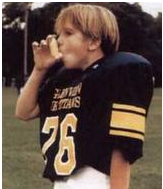
Have Asthma? Don't Say No To Exercise


There is a lot of confusion about asthma and its relationship to exercise.  Most athletes I treat DO NOT require any restrictions when it comes to sports.  Dr S.


Asthma doesn't have to mean game over for athletes


Sixteen-year-old basketball standout Larry Austin Jr. is doing what a doctor thought unlikely, given his asthma.
“Actually, my doctor told me awhile ago that I’d never play a sport,” says Austin, who has college basketball scholarship offers and plans to compete for a spot on the USA Basketball under-17 team that will play in the World Championships this summer.
Austin, who will be a junior this fall at Lanphier High School, said his asthma symptoms include a lot of sneezing and a nose that is “stopped up.” He’s battled asthma since he was 3 months old.
Time with a nebulizer and sometimes an inhaler helps Austin before basketball games. He says he hasn’t had any problems with asthma this year.
“I started to grow out of it, slowly,” he says.
A chronic lung disease that makes air movement in and out of lungs difficult, asthma can be managed but not cured. In asthma, the lungs’ airways (bronchi) become inflamed and can spasm, causing shortness of breath and wheezing. The exact cause isn’t known, but certain “triggers” (a condition, thing or activity) can make asthma worse.
Some refer to asthma that worsens with exercise as “exercise-induced” asthma. But that term can be misleading, say local medical doctors.
“Usually, the term ‘exercise-induced’ asthma is used. Potentially, it’s just episodic bronchial constriction, which follows exercising patients who have asthma,” says Dr. Anwar Shafi, assistant professor of pediatrics, specializing in pediatric pulmonology, at the Southern Illinois University School of Medicine.
“I think ‘exercise-induced asthma’ is potentially misleading because exercise is not an independent risk for asthma. It’s just a trigger for bronchial constriction in patients who have underlying asthma.”
Initially, it was thought that Austin’s asthma was exercise-induced, but it was later learned that allergens are his triggers.
“It took a lot of trips going to the hospital, being admitted into the hospital before they identified what was really causing it,” said Larry’s mother, Christa Austin, who adds that her son receives allergy shots every 20 days for maintenance.
Other side of the coin
Shafi says exercise can be a trigger for some of his asthmatic patients.
“When we see patients, we take a careful history ... we try to determine if the child has asthma ... (with) typical symptoms of asthma: cough, wheezing, shortness of breath, chest tightness,” Shafi says.
“Then we try to ascertain what can be the triggers. It depends on the age. Usually in children, viral infections are the most common cause for triggering asthma symptoms. If they do have significant allergies, then allergens can be a trigger for their asthma as well.”


Tuesday, June 5, 2012

The Facts About Asthma (in kids)

Parents, please check out my article in this month's issue of Houston Family Magazine in the "Talk to the Doc" section.  It features some fundamentals of childhood asthma I feel every parent should know. Dr S


The Facts About Asthma

by Sarat Susarla, MD

Board Certified in Pediatric Pulmonology, Sleep Medicine, and Pediatrics
breathing
Why worry if your child has a cough? Many self-limiting infections can trigger a cough, which will usually resolve within 7-10 days.
But when respiratory symptoms like cough are chronic or become associated with other problems like wheezing and shortness of breath, it’s time to consider asthma.
Asthma is a chronic lung condition associated with inflammation of the airways, making it hard to breathe. It often starts in childhood, although it affects people of all ages.
According to the American Academy of Pediatrics, between 80 and 90 percent of children develop symptoms by age 4 or 5.
And according to a 2010 National Health Interview Survey by the Centers for Disease Control, 7 million U.S. children (10%) aged 17 years and under have asthma.
Asthma seems to be on the rise, although the medical community isn’t sure if this is simply because we’re better at diagnosing the disease or whether it’s due to changes in our environment. Asthma is often confused with infections like bronchitis, which often present in a similar way.
Remarkably, rates of hospitalization and emergency room visits in children have not decreased in the past 10 years, despite the availability of highly effective preventative medication.
Asthma can be difficult to diagnose, especially in children. A combination of symptoms; family history (due to genetic factors); and lung function testing are helpful in reaching a diagnosis.
There is no cure for asthma, but it can be managed with medication.

Monday, June 4, 2012

Study Shows Asthma Medications Prevent Hospitalization When Used Properly


The ICU is one place you don't want to be if you have asthma.  Research shows that available medications for asthma are highly effective in reducing hospitalizations.  SS

Inhaled Steroids Lead to Big Drop in Asthma Deaths at Texas Hospital: Study

They reduce inflammation in the lungs, improving control of asthma symptoms


TUESDAY, May 15 (HealthDay News) -- Patient education and medication compliance contributed to a 74 percent drop in the number of patients with life-threatening asthma admitted to the intensive care unit at University Hospital in San Antonio, Texas, researchers report.

Their review of 30 years of hospital data focused on patients with severe asthma who didn't respond to standard inhalers.
They found that there were 227 patients admitted to the intensive care unit (ICU) with 280 episodes of life-threatening asthma between 1980 and 2010. One patient died, but the death was from a different cause after the patient's asthma improved, according to the team at the University of Texas Health Science Center at San Antonio.
"The main reason for the decline in cases is that more of our patients are taking their controller medications, such as inhaled corticosteroids, which reduce the amount of inflammation in the airways," lead author Dr. Jay Peters, chief of pulmonary diseases at the Health Science Center, said in a university news release.
The researchers also found that insertion of a breathing tube, called intubation, when patients arrived in the emergency department did not lead to longer hospital stays.
"I think our methods of treating patients in the emergency department have improved so much that previous studies of issues with intubation don't hold up anymore," Peters said.
The study appears in the journal Respiratory Medicine.
"On the front end, this study reinforces the importance of staying on controller medications," he said. "On the back end, it shows low mortality for patients in the medical ICU and that we don't need to be afraid to intubate patients and place them on mechanical ventilation if necessary."

Thursday, May 24, 2012

Teenager Denied Asthma Inhaler Nearly Dies at School


This should never happen to your child.  Life threatening asthma attacks do occur and require prompt intervention.  Having a physician-authored asthma action plan can prevent this nightmarish scenario.  SS

Student having asthma attack denied inhaler by school nurse


A senior student at Delton High School near Orlando, Florida nearly died last week after a school nurse refused to give him a doctor-prescribed asthma inhaler, even after he passed out from lack of oxygen.
17-year-old Michael Rudi told Orlando news station Local 6 on Monday that as he lost consciousness in the nurse’s office, she closed the door on him, leaving Rudi wondering if he would even wake up.
The nurse, who was not named, was apparently following school policy, even despite Rudi’s name appearing on a prescription for the inhaler.  Students are not allowed to possess prescription drugs at Delton High School, so a release form signed by parents is required by school officials before medicine can be dispensed — something Rudi’s folks had not done.
Even though the nurse refused to step over the school’s policy and give Rudi his inhaler, she could have called 911. But she didn’t, and now Rudi’s mother wants to press charges for child endangerment.
“I mean its common sense if I saw an animal on the street in distress I would probably stop to help, why wouldn’t she help a child,” Sue Rudi told Local 6 reporter Shaun Chaiyabhat. “How dare you deny my son something that we all take for granted, breath. Why didn’t someone call 911?”
There are currently no over-the-counter medications available for Americans who suffer from asthma or reactive airways. Although U.S. pharmacies used to offer a non-prescription cardiac stimulant inhaler that helped relieve asthma symptoms, regulators pulled it from shelves in February. Other milder drugs that address asthma symptoms are much more costly and require a prescription.

Sunday, May 20, 2012

Exercise may reduce asthma symptoms or attacks


Not only is it safe for people with asthma to exercise, but doing so could reduce their risk of asthma symptoms or attacks, according to a new evidence review in TheCochrane Library.

Many people with asthma report avoiding exercise because they're afraid it could trigger symptoms including shortness of breath, wheezing or a full-blown asthma attack, said review author Kristin V. Carson. These fears might be encouraged from misreading their symptoms, their family's beliefs about exercise and asthma, or even from their physicians.

Over time, Carson explains, patients can become out of shape, losing muscle mass and cardiovascular fitness. That makes any future attempts at physical activity significantly harder, increasing the chances that patients will become fatigued and breathless and further discouraging physical activity.

"This results in a spiraling cycle," she says, in which patients are even more likely to avoid exercise.

To determine whether exercise was a danger to asthmatics, Carson and her colleagues reviewed previous studies that looked at the effects of physical training on people withasthma , comparing patients who received no or minimal physical activity to those who exercised for at least 20 minutes, twice a week, over the course of four weeks.

The researchers found that the patients who had exercised—using physical training as varied as running outdoors or on a treadmill, cycling, swimming or circuit training—were no more likely to have a serious asthma-related problem than those who weren't exercising or who did light exercising such as yoga. Additionally, Carson said, their findings showed that patients in exercise programs improved their cardiovascular fitness, which in turn could reduce asthma symptoms over time. Some limited evidence from the included studies also suggested that exercise improved patients' quality of life, she added, which could contribute to other health benefits and improved psychological well-being.

"We found no reason for people with stable asthma to refrain from regular exercise," Carson said. "Physicians should encourage their patents with stable asthma to engage in physical training programs."

Len Horowitz, M.D., a pulmonary specialist at Lenox Hill Hospital in New York City who wasn't involved in this review, agrees that asthma patients shouldn't shy away from exercise. However, even though research suggests that exercise is safe for asthmatics, he says that many people will still use their asthma as a reason to avoid physical activity. "Not everyone wants to exercise," he said. "When patients think exercise makes them symptomatic or makes them risk an attack, it's a good excuse not to do it."

Horowitz notes that may professional athletes have asthma, which hasn't negatively affected their careers. However, he explains, some patients do have exercise-inducedasthma, in which vigorous or prolonged exercise can trigger symptoms. He advises patients in his practice to take precautions if they're susceptible, including pre-treating themselves with an albuterol inhaler, avoiding exercise that exposes their lungs to cold, dry air (such as running outside in the winter) and building their activity levels gradually.

Read more here