Houston Area Pediatric Specialists

Independent pediatric specialists aim to serve our community. We want to share news and analysis regarding our specialties and our practices.


Saturday, August 20, 2011

Back-To-School Sleeping Tips on Texas Public Radio


Dr. Josh Rotenberg, pediatric neurologist and sleep specialist, interviewed about sleep problems in children...

Back-To-School Sleeping Tips on Texas Public Radio

With the first day of school right around the corner, parents are trying to get their kids back on a school-year sleeping schedule. Texas Public Radio’s Eileen Pace reports it’s not too late to get some use out of the tips from a local sleep expert.

August 18, 2011 · Dr. Josh Rotenberg says kids sleep when they get sleepy during the summer — sometimes 11:00 or midnight — and then sleep late the next morning.

“When kids have social constraints removed from them, they live naturally. They’re like free-range chickens,” Rotenberg says.

In fact, he says those studies showing kids have a later wake-up clock than adults do are true.

“What’s really interesting is that I see over the summer many fewer kids for headaches and ticks because I think kids are allowed to sleep longer over the summer. And there are a number of studies that show that a delayed school start time — so when you move a school start time in high school from 7:30 to 9:00 — grades go up,” Rotenberg says.

Schools generally have not pushed back their start times.

Listen to the report here....

http://www.tpr.org/news/2011/08/news1108181.html

Sunday, August 14, 2011

At Last, Football Faces Concussion Problems Head-On

Post by Dr. Rotenberg...

August 14, 2011

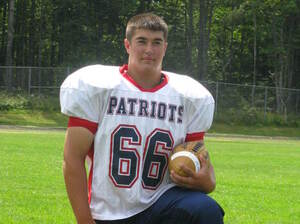
The NFL got back to the playing field this past week for its first preseason games since the players and owners agreed to a new collective bargaining agreement. But the scene at NFL training camps is a bit different this year.

New rules now limit the amount of full-contact practice that players can participate in. Gone are the grueling summer two-a-days.

These rules were put in place to address growing concerns about player injuries, concussions in particular. Medical research suggests that the bone-crunching hits that energize fans have serious health consequences for players long after they hang up their pads.....

listen here...

http://www.npr.org/2011/08/14/139621182/at-last-football-faces-concussion-problems-head-on

My Concussion - Be Nice To Your Brain


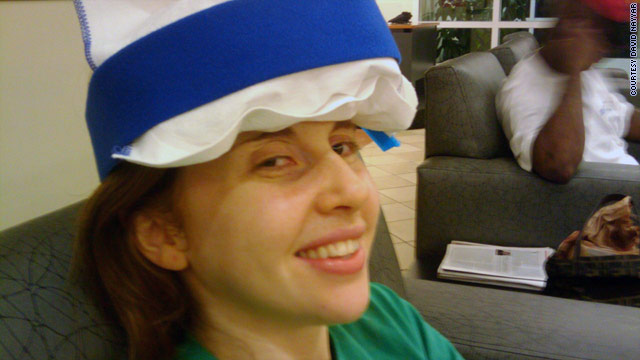
Elizabeth Landau is a writer/producer for CNN.com. This is her story of recovering from a concussion.

I write about health issues every day but I honestly thought that concussions happened only to football, soccer and hockey players. Since kickball is the only sport I play competitively - and there's an obvious limit to how cut-throat an adult kickball game can be - I never considered that a serious head injury would happen to me.

But at kickball in mid-July, I was standing in my usual less-than-important position in right field when the other team's kicker sent the ball flying right toward me. Excited to be useful, I jumped to catch it. Unfortunately, so did one of my teammates, according to my friends who watched in horror.


http://thechart.blogs.cnn.com/2011/08/02/my-concussion-be-nice-to-your-brain/comment-page-2/#comment-221197

Back to school with asthma - Asthma Action Plan

Going back to school after summer break is often a hectic time for families. Students must be registered, school supplies purchased, team sports signed up for, etc. For patients with asthma, there is one more thing to add to the list. Students with asthma need to have a supply of their rescue medication at school. In addition to the medication, they also may need an extra spacer (aka valved holding chamber) or nebulizer to keep at the nurses office. They will also need a set of doctor’s orders, often called an asthma action plan to be given to the school nurse to keep on file. These essentially is the “rescue plan” for what to do if the student has an asthma attack at school. A blank asthma action plan can be acquired from the school, your physician or downloaded here.


http://www.aaaai.org/Aaaai/media/MediaLibrary/PDF%20Documents/Libraries/NEW-WEBSITE-LOGO-asthma-action-plan_HI.pdf

Back To School Asthma Checklist

__ Rescue medication

__ Spacer or nebulizer

__ Asthma Action Plan

By John M. Robertson, MD

Saturday, June 18, 2011

Headaches and Migraines in Children


Talk to the Doc — June 2011

Grinning cats, smoking caterpillars, and butterflies made out of bread. Talking doorknobs, marching cards, and a chronically-late rabbit.

Famous author Lewis Carroll must have had one heck of a headache when he dreamed up these characters.

It’s said that Carroll was inspired to write Alice in Wonderland after experiencing migraine auras—the distorted sense of perception that sometimes precedes a migraine.

Migraine auras have also been referred to as “Alice in Wonderland Syndrome,” rather fitting considering the book became one of the most popular children’s stories of all time, and children themselves have been getting migraines since the beginning of time.

Headaches are quite a common pediatric problem, with approximately eight percent of kids experiencing one by the age of 3, and two to three percent of those fitting the criteria for migraine. By elementary or middle school, 60 percent of children have had a headache; in approximately 10 percent, that headache was a migraine.

http://houstonfamilymagazine.com/talk-to-the-doc/migraines-in-children/

http://bluetoad.com/publication/?i=71351

Saturday, April 23, 2011

To avoid concussion rules, some players sandbag their baseline tests

Why is a comprehensive neurologic evaluation important after a concussion?

As physicians we treat people and not tests. Tests provide supportive data that quantify deficits. If you game the test or use non-standard testing conditions, the data can be flawed.

Dr. Rotenberg

To avoid concussion rules, some players sandbag their baseline tests

NFL players are given tests to determine their baseline brain functioning so that if they suffer a concussion, they can be held out until they return to their previous levels. But NFL players often don’t want to be held out after they suffer a concussion. And that may lead to some of them intentionally doing poorly on baseline tests.

http://profootballtalk.nbcsports.com/2011/04/22/to-avoid-concussion-rules-some-players-sandbag-their-baseline-tests/

Friday, April 8, 2011

Hazards: For Children in E.R., a Big Increase in CT Scans

By RONI CARYN RABIN
Published: April 7, 2011

The number of computed tomography scans performed on children visiting hospital emergency rooms has increased fivefold in recent years, to 1.65 million in 2008 from 330,000 in 1995, a new study has found.

The analysis, published online on Tuesday in the journal Radiology, found that CT scans were performed in almost 6 percent of all children’s emergency department visits in 2008, compared with about 1 percent in 1995. Scans were most commonly done on children arriving with head injuries, headaches or abdominal pain.

The sharp increase in the use of CT scans did not surprise the authors of the report, who said advances in the technology had resulted in improved image quality that can greatly aid diagnosis of childhood ailments. But the scans expose patients to high levels of ionizing radiation that can cause cancer in later years, and radiation is even more harmful for children than for adults.

Read the rest of the article here.

Wednesday, April 6, 2011

Psychological Problems in Childhood Affect Earning Power and Relationships Later

By Meredith Melnick Monday, April 4, 2011

In a 50-year study of more than 17,000 British people who were followed since birth, researchers from the RAND Labor and Population program found that psychological problems during childhood were related to measurable social and financial deficits later in life.

By age 50, those who had experienced serious psychological problems as children had family incomes that were 25% smaller than those of their peers who didn't have the same issues. Kids who had serious psychological problems — such as depression, anxiety, substance abuse or other mental disorders that caused moderate or severe 'emotional maladjustment' as determined by a doctor — were also less likely to have stable personal relationships or to be married by 50.


Read the rest of the article here.

Behavior Therapy Trumps Medications for Autism, Study Says

Research Concludes Behavior-Based Interventions Are The Most Effective By LARA SALAHI April 4, 2011


Shannon Penrod, 48, of Saugus, Calif., could feel a change coming over her son Jem Miller. By the time he was two, parts of his speech gradually began to disappear. In just a few months, what started as, "Mama what are you doing?" turned to "Mama, what doing?" Then he retreated into silence. "He didn't even acknowledge me in a room or seek me out," said Penrod.

Within six months, Jem was diagnosed with autism, a disorder characterized by withdrawn social and behavioral skills. "Autism was like a thief coming into the night and stealing pieces of my child," said Penrod. "Something in him seemed like it was just going away." While Jem's deteriorating language skills and apparent emotional separation from his family was hard to bear for Penrod and her husband, learning about Jem's diagnosis was not the hardest part, she said. Finding the right treatment was.

While there is no cure for autism, there is no shortage of purported treatments to manage the range of symptoms associated with the wide spectrum of the disorder. And, like Penrod, many parents of newly diagnosed children find themselves inundated with overflowing and at times conflicting treatment recommendations.

Read the rest of the article here.

Food Fight: Our Brain's Reward System Meets the Bottom Line