Houston Area Pediatric Specialists

Independent pediatric specialists aim to serve our community. We want to share news and analysis regarding our specialties and our practices.


Showing posts with label Rotenberg. Show all posts

Tuesday, August 23, 2011

5 Things Athletes should know about concussions


5 things athletes should know about concussions


As summer comes to an end, thousands of young athletes head back to the field for football, cheerleading and other sports. And the question is posed – who is paying attention to their heads?

The bad news: there are approximately 3.8 million sport and recreation-related concussions in the United States each year.

The good news: Texas law (as of Aug. 1) now requires school districts to make sure children get the standard of neurologic care required to limit the long-term damage concussions can impose.

According to the new law, districts must establish a “concussion management team” that includes at least one physician, and any student-athlete showing symptoms of concussion must be removed from competition and not may not return until evaluated by the physician and at least one other member of that team.

The University Interscholastic League threw in its two cents to the law by adding a rule that also went into effect Aug. 1 stating that high school athletes competing in a University Interscholastic League-sanctioned sport are no longer allowed to return to games or practices on the same day they are injured.

“Concussion is a mild traumatic brain injury,” said Dr. Joshua Rotenberg, pediatric neurologist and neurologic medical director of Texas Medical and Sleep Specialists, in a press release.

“While the state guidelines are excellent and exceedingly important,” he added.

“They don't replace a parent's keen eye and gut intuition. Parents need to know what to look for and what to do if a child is injured during a game on or off the field.” Rotenberg offered the following tips to identify and properly treat this type of traumatic brain injury.

Remove the athlete from play. Look for signs and symptoms of a concussion if your athlete has experienced a bump or blow to the head or body. Early brain and body rest will speed recovery.

Know the signs and symptoms of a concussion. Some of the common symptoms children, teens and young adults may experience include, but are not limited to:

Appearing dazed, stunned or confused

Forgetting sports plays

Moving clumsily, slowly or hesitantly

Answering questions or thinking slowly

Loss of consciousness

Inability to recall events before or after the hit or fall

Headache or “pressure” in head

Nausea or vomiting

Double or blurry vision

Sensitivity to light and noise

Be proactive. If you notice changes in behavior, seek immediate medical attention. You can't see a concussion and some athletes may not experience symptoms until hours or even days after an injury.

Follow a step-wise process prior to returning to play. Although most concussions are mild in nature, it is still important to proceed with caution. Consider having your child evaluated by a specialist in all aspects of head injuries.

Don't dismiss too quickly. Post concussive syndrome, which may include headaches, dizziness and sensitivity to light, can last for up to a year or more after the injury and is not associated with the severity of the initial injury. If these persistent symptoms appear immediately or weeks or months after the injury, take your child to see a specialist.

According to Rotenberg, most people with a concussion will recover quickly and fully. But for some people, the signs and symptoms of concussion can last for days, weeks or longer.

Because some neurologic abnormalities can only be detected by specialists, Rotenberg said pediatric neurologists might recommend a neuropsychological evaluation in addition to a specialized neurologic examination.

Texas Medical and Sleep Specialists may be reached at 249-5020 or www.txmss.com for more information.


Read more: http://www.mysanantonio.com/community/north_central/news/article/5-things-athletes-should-know-about-concussions-2137398.php#ixzz1VulJzD73

Saturday, August 20, 2011

Febrile Seizures - a beginners guide

From Dr. Rotenberg (www.txmss.com)...
Many parents need information on febrile seizures. Please note that there is no data that "temperature" management prevents febrile seizures.
Simple febrile seizures are well-managed by general pediatricians. Please develop a seizure action plan for school. JR

Febrile Seizures

A febrile seizure is a convulsion in a child triggered by a fever. These convulsions occur without any brain or spinal cord infection or other nervous system (neurologic) cause.

Causes

About 3 - 5% of otherwise healthy children between ages 9 months and 5 years will have a seizure caused by a fever. Toddlers are most commonly affected. Febrile seizures often run in families.
Most febrile seizures occur in the first 24 hours of an illness, and not necessarily when the fever is highest. The seizure is often the first sign of a fever or illness
Febrile seizures are usually triggered by fevers from:
  • Ear infections
  • Roseola infantum (a condition with fever and rash caused by several different viruses)
  • Upper respiratory infections caused by a virus
Meningitis causes less than 0.1% of febrile seizures but should always be considered, especially in children less than 1 year old, or those who still look ill when the fever comes down.
A child is likely to have more than one febrile seizure if:
  • There is a family history of febrile seizures
  • The first seizure happened before age 12 months
  • The seizure occurred with a fever below 102 degrees Fahrenheit

Symptoms

A febrile seizure may be as mild as the child's eyes rolling or limbs stiffening. Often a fever triggers a full-blown convulsion that involves the whole body.
Febrile seizures may begin with the sudden contraction of muscles on both sides of a child's body -- usually the muscles of the face, trunk, arms, and legs. The child may cry or moan from the force of the muscle contraction. The contraction continues for several seconds, or tens of seconds. The child will fall, if standing, and may pass urine.
The child may vomit or bite the tongue. Sometimes children do not breathe, and may begin to turn blue.
Finally, the contraction is broken by brief moments of relaxation. The child's body begins to jerk rhythmically. The child does not respond to the parent's voice.
A simple febrile seizure stops by itself within a few seconds to 10 minutes. It is usually followed by a brief period of drowsiness or confusion. A complex febrile seizure lasts longer than 15 minutes, is in just one part of the body, or occurs again during the same illness.
Febrile seizures are different than tremors or disorientation that can also occur with fevers. The movements are the same as in a grand mal seizure.

Exams and Tests

The health care provider may diagnose febrile seizure if the child has a grand mal seizure but does not have a history of seizure disorders (epilepsy). In infants and young children, it is important to rule out other causes of a first-time seizure, especially meningitis.
In a typical febrile seizure, the examination usually shows no abnormalities other than the illness causing the fever. Typically, the child will not need a full seizure workup, which includes an EEG, head CT, and lumbar puncture (spinal tap).
To avoid having to undergo a seizure workup:
  • The child must be developmentally normal.
  • The child must have had a generalized seizure, meaning that the seizure was in more than one part of the child's body, and not confined to one part of the body.
  • The seizure must not have lasted longer than 15 minutes.
  • The child must not have had more than one febrile seizure in 24 hours.
  • The child must have a normal neurologic exam performed by a health care provider.

Treatment

During the seizure, leave your child on the floor.
  • You may want to slide a blanket under the child if the floor is hard.
  • Move him only if he is in a dangerous location.
  • Remove objects that may injure him.
  • Loosen any tight clothing, especially around the neck. If possible, open or remove clothes from the waist up.
  • If he vomits, or if saliva and mucus build up in the mouth, turn him on his side or stomach. This is also important if it looks like the tongue is getting in the way of breathing.
Do NOT try to force anything into his mouth to prevent him from biting the tongue, as this increases the risk of injury. Do NOT try to restrain your child or try to stop the seizure movements.
Focus your attention on bringing the fever down:
  • Insert an acetaminophen suppository (if you have some) into the child's rectum.
  • Do NOT try to give anything by mouth.
  • Apply cool washcloths to the forehead and neck. Sponge the rest of the body with lukewarm (not cold) water. Cold water or alcohol may make the fever worse.
  • After the seizure is over and your child is awake, give the normal dose of ibuprofen or acetaminophen.
After the seizure, the most important step is to identify the cause of the fever.

Outlook (Prognosis)

The first febrile seizure is a frightening moment for parents. Most parents are afraid that their child will die or have brain damage. However, simple febrile seizures are harmless. There is no evidence that they cause death, brain damage, epilepsy, mental retardation, a decrease in IQ, or learning difficulties.
A small number of children who have had a febrile seizure do go on to develop epilepsy, but not because of the febrile seizures. Children who would develop epilepsy anyway will sometimes have their first seizures during fevers. These are usually prolonged, complex seizures.
Nervous system (neurologic) problems and a family history of epilepsy make it more likely that the child will develop epilepsy. The number of febrile seizures is not related to future epilepsy.
About a third of children who have had a febrile seizure will have another one with a fever. Of those who do have a second seizure, about half will have a third seizure. Few children have more than three febrile seizures in their lifetime.
Most children outgrow febrile seizures by age 5.

Possible Complications

  • Biting oneself
  • Breathing fluid into the lungs
  • Complications if a serious infection, such as meningitis, caused the fever
  • Injury from falling down or bumping into objects
  • Injury from long or complicated seizures
  • Seizures not caused by fever
  • Side effects of medications used to treat and prevent seizures (if prescribed)

When to Contact a Medical Professional

Children should see a doctor as soon as possible after their first febrile seizure.
If the seizure is lasting several minutes, call 911 to have an ambulance bring your child to the hospital.
If the seizure ends quickly, drive the child to an emergency room when it is over.
Take your child to the doctor if repeated seizures occur during the same illness, or if this looks like a new type of seizure for your child.
Call or see the health care provider if other symptoms occur before or after the seizure, such as:
It is normal for children to sleep or be briefly drowsy or confused right after a seizure.

Prevention

Because febrile seizures can be the first sign of illness, it is often not possible to prevent them. A febrile seizure does not mean that your child is not getting the proper care.
Occasionally, a health care provider will prescribe diazepam to prevent or treat febrile seizures that occur more than once. However, no medication is completely effective in preventing febrile seizures.

Alternative Names

Seizure - fever induced

References

Johnston MV. Seizures in childhood. In: Kliegman RM, Behrman RE, Jenson HB, Stanton BF, eds. Nelson Textbook of Pediatrics. 18th ed. Philadelphia, Pa: Saunders Elsevier; 2007:chap 593.

Update Date: 2/11/2010

Updated by: David C. Dugdale, III, MD, Professor of Medicine, Division of General Medicine, Department of Medicine, University of Washington School of Medicine. Also reviewed by David Zieve, MD, MHA, Medical Director, A.D.A.M., Inc.
A.D.A.M Quality Logo
A.D.A.M., Inc. is accredited by URAC, also known as the American Accreditation HealthCare Commission (www.urac.org). URAC's accreditation programis an independent audit to verify that A.D.A.M. follows rigorous standards of quality and accountability. A.D.A.M. is among the first to achieve this important distinction for online health information and services. Learn more about A.D.A.M.'s editorial policy, editorial process and privacy policy. A.D.A.M. is also a founding member of Hi-Ethics and subscribes to the principles of the Health on the Net Foundation (www.hon.ch).
The information provided herein should not be used during any medical emergency or for the diagnosis or treatment of any medical condition. A licensed physician should be consulted for diagnosis and treatment of any and all medical conditions. Call 911 for all medical emergencies. Links to other sites are provided for information only -- they do not constitute endorsements of those other sites. Copyright 1997-2011, A.D.A.M., Inc. Any duplication or distribution of the information contained herein is strictly prohibited.

Sunday, August 14, 2011

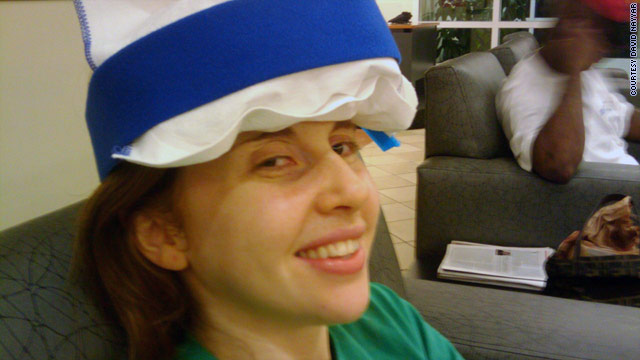
My Concussion - Be Nice To Your Brain


Elizabeth Landau is a writer/producer for CNN.com. This is her story of recovering from a concussion.

I write about health issues every day but I honestly thought that concussions happened only to football, soccer and hockey players. Since kickball is the only sport I play competitively - and there's an obvious limit to how cut-throat an adult kickball game can be - I never considered that a serious head injury would happen to me.

But at kickball in mid-July, I was standing in my usual less-than-important position in right field when the other team's kicker sent the ball flying right toward me. Excited to be useful, I jumped to catch it. Unfortunately, so did one of my teammates, according to my friends who watched in horror.


http://thechart.blogs.cnn.com/2011/08/02/my-concussion-be-nice-to-your-brain/comment-page-2/#comment-221197

Back to school with asthma - Asthma Action Plan

Going back to school after summer break is often a hectic time for families. Students must be registered, school supplies purchased, team sports signed up for, etc. For patients with asthma, there is one more thing to add to the list. Students with asthma need to have a supply of their rescue medication at school. In addition to the medication, they also may need an extra spacer (aka valved holding chamber) or nebulizer to keep at the nurses office. They will also need a set of doctor’s orders, often called an asthma action plan to be given to the school nurse to keep on file. These essentially is the “rescue plan” for what to do if the student has an asthma attack at school. A blank asthma action plan can be acquired from the school, your physician or downloaded here.


http://www.aaaai.org/Aaaai/media/MediaLibrary/PDF%20Documents/Libraries/NEW-WEBSITE-LOGO-asthma-action-plan_HI.pdf

Back To School Asthma Checklist

__ Rescue medication

__ Spacer or nebulizer

__ Asthma Action Plan

By John M. Robertson, MD

Saturday, June 18, 2011

Headaches and Migraines in Children


Talk to the Doc — June 2011

Grinning cats, smoking caterpillars, and butterflies made out of bread. Talking doorknobs, marching cards, and a chronically-late rabbit.

Famous author Lewis Carroll must have had one heck of a headache when he dreamed up these characters.

It’s said that Carroll was inspired to write Alice in Wonderland after experiencing migraine auras—the distorted sense of perception that sometimes precedes a migraine.

Migraine auras have also been referred to as “Alice in Wonderland Syndrome,” rather fitting considering the book became one of the most popular children’s stories of all time, and children themselves have been getting migraines since the beginning of time.

Headaches are quite a common pediatric problem, with approximately eight percent of kids experiencing one by the age of 3, and two to three percent of those fitting the criteria for migraine. By elementary or middle school, 60 percent of children have had a headache; in approximately 10 percent, that headache was a migraine.

http://houstonfamilymagazine.com/talk-to-the-doc/migraines-in-children/

http://bluetoad.com/publication/?i=71351