Houston Area Pediatric Specialists

Independent pediatric specialists aim to serve our community. We want to share news and analysis regarding our specialties and our practices.


Showing posts with label exercise induced asthma. Show all posts

Monday, August 12, 2013

Really? Breathing Exercises Can Relieve Asthma

There is undoubtedly a role for non-pharmacologic treatment of asthma and other kinds of respiratory disorders.  While they may not replace medication per se, a well conditioned, exercised lung probably manages inflammation and other forms of impairment better than an under utilized, poorly conditioned lung. Dr. Susarla

Really? Breathing Exercises Can Relieve Asthma

THE FACTS
Breathing exercises are among the most popular alternative therapies for asthmatics. But do they work?
According to a recent report by the Agency for Healthcare Research and Quality, the answer depends on the technique. Some appear effective in reducing asthma severity, but there is little evidence to support others.
In the exhaustive, 219-page report, researchers examined 22 randomized studies of breathing techniques. Among the most common are hyperventilation-reduction techniques like the Buteyko method, which instructs asthmatics to breathe shallowly and slowly through the nose when short of breath. The report also looked at yoga breathing exercises and so-called inspiratory-muscle training, which involves exercises and devices that make inhaling more difficult in order to strengthen muscles.
The researchers found the most robust body of evidence supported hyperventilation-reduction breathing techniques, which achieved “medium to large improvements in asthma symptoms and reductions in reliever medication use of approximately 1.5 to 2.5 puffs per day.”
Looking at inspiratory training approaches, the researchers could not find enough credible research to draw any firm conclusions. They did find some evidence for yoga exercises, which typically require deep breaths — usually through the nose — with extended exhalation. But most of the evidence came from studies in India, where yoga exercises are more intensive and frequent than in the United States.
Still, the authors said, “Patients with asthma who are students of yoga and willing to undertake intensive training may find benefits of asthma-targeted practice with a trained yoga practitioner.”
THE BOTTOM LINE
Breathing exercises may help relieve asthma, though the efficacy varies.

Effects of Exercise Training on Airway Hyperreactivity in Asthma: A Systematic Review and Meta-Analysis.

Abstract

BACKGROUND:

Although physical exercise is recommended for asthmatics, evidence on the effects of exercise on clinical key factors is still missing.

OBJECTIVES:

We performed a systematic review and meta-analysis to determine the effect of exercise training (EXT) on quality of life (QoL), bronchial hyperresponsiveness (BHR), exercise-induced bronchoconstriction (EIB), lung function and exercise capacity, plus the factors affecting changes in QoL and exercise capacity in asthmatics after a period of EXT.

DATA SOURCES:

A computerized search was conducted in MEDLINE, EMBASE, and CINAHL (last search on 15 November 2012), without language restriction, and references of original studies and reviews were searched for further relevant studies.

STUDY SELECTION:

Two independent investigators screened full-text studies with asthmatic subjects undertaking EXT (defined as training for ≥7 days, ≥2 times per week, ≥5 training sessions in total) that assessed at least one of the following outcomes: QoL, airway hyperreactivity, forced expiratory volume in one second (FEV1), peak expiratory flow (PEF), inflammatory parameters, exercise capacity, or exercise endurance. Potentially relevant studies were excluded if only respiratory muscle training, breathing exercises or yoga was performed, if asthmatic subjects with co-morbidities were investigated, if only data of mixed patient groups without separate results for asthmatics were presented, if training regimens were not sufficiently specified, if no numerical outcome data were presented, and if new long-term medication was introduced in addition to physical training. Of 500 potentially relevant articles, 13.4 % (67 studies including 2,059 subjects) met the eligibility criteria and were included for further analyses.

STUDY APPRAISAL AND SYNTHESIS METHODS:

Data extraction and risk of bias assessment was performed according to the Cochrane Handbook for Systematic Reviews of Interventions. A meta-analysis of all randomized controlled trials (RCTs) was performed to determine the effect of EXT on asthma symptoms, BHR, EIB, FEV1, exercise capacity and exercise endurance compared with control training. In addition, relative pre/post changes were analysed in all RCTs and controlled trials. Finally, multiple linear regression models were used to identify effects of relative changes in airway hyperreactivity (BHR or EIB), lung function (FEV1 or PEF) and training hours on QoL and exercise performance.

RESULTS:

In a total of 17 studies including 599 subjects, meta-analyses showed a significant improvement in days without asthma symptoms, FEV1and exercise capacity while BHR only tended to improve. The analysis of relative within-group changes after EXT showed, however, significant improvements in QoL (17 %), BHR (53 %), EIB (9 %), and FEV1 (3 %) compared with control conditions. Multiple linear regression models revealed that changes in airway hyperreactivity and lung function significantly contributed to the change in QoL, while mainly the changes in airway hyperreactivity contributed to the change in exercise capacity.

CONCLUSION:

EXT was shown to improve asthma symptoms, QoL, exercise capacity, BHR, EIB, and FEV1 in asthmatics and improvements in BHR explained part of the improvement in QoL and exercise capacity. Thus, physical activity should be recommended as a supplementary therapy to medication. However, more well controlled studies should be performed assessing the relationship of physical activity, QoL, airway hyperreactivity, lung function and especially airway inflammation as well as medication intake.

Thursday, April 25, 2013

Kids With Asthma Play Hard, Too

If you child or teenager's exercise is restricted due to asthma, it may not be adequately treated and often can be fixed.  Furthermore, the benefits of exercise on the DISEASE ITSELF may be greater than we know.  Dr. Susarla


Children with asthma should play hard in gym class and stop worrying they might have an attack that could leave them struggling to breathe, respiratory specialists are now recommending.
Physical activity by people with asthma isn't harmful and might even be helpful to treating the condition, doctors in the field believe. A report published last year in the Cochrane Database Systems Review, a journal that reviews health-care treatments and decision making, looked at 19 previous studies of exercise and asthma and concluded that people with the respiratory condition fared well with physical activity. The studies' results ranged from showing no difference in patients' asthma control to an increase in the number of symptom-free days and a decrease in asthma severity.

"If you have good, controlled asthma, you should be able to exercise," Dr. Craig says.
Laboratory studies on animals with asthma also have shown that exercise appears to reduce the severity and frequency of attacks, says Timothy Craig, an immunologist and allergist at Pennsylvania State University College of Medicine in Hershey, Pa. The experiments with mice found that exercise calms the activity of inflammatory proteins and peptides in airways that, when stimulated, cause an attack, he says.
Fear of physical activity is real for many asthma patients. Exercise can spur an attack, in which the airways get inflamed and lung muscles contract, making it hard for people to catch their breath. If untreated, serious cases can lead to death.

With nearly 1 out of 10 children having asthma, it is important to find ways for them to engage in physical activity, health officials say. Being sedentary increases the risk of obesity. Kids with asthma may struggle socially as well. Being sidelined from gym class or other group activities may make them feel isolated, and other children may see them as fragile and a target for teasing.
Asthma affects about 9% of children in the U.S. under the age of 17, and for many the condition is lifelong. Overall, more than 25 million Americans of all ages have asthma, representing about 8.4% of the population in 2010, up from 7.3% in 2001, according to data from the Centers for Disease Control and Prevention.

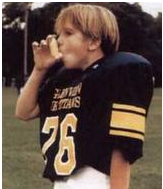
image

When exercise leads to frequent asthma attacks, it is a sign the asthma isn't well controlled and that a better treatment plan is needed, Dr. Craig says. In most of these cases, both the physicians and patients have underestimated the asthma, he says. Patients may then become frustrated and anxious and abandon efforts to exercise, he says.
Celia Vigil, a 12-year-old in Spokane, Wash., avoided strenuous exercise for years for fear of an asthma attack. When she did participate in school sports, she says she usually didn't get very far and often had to be pulled quickly out of a game. An asthma flare-up left her feeling like she couldn't get enough air. "It feels scary," she says. "You don't know when you'll get out of it."

Even when people with asthma have a good treatment plan in place, they need to take extra precautions while exercising, Dr. Craig says. Patients should warm up before walking or jogging, for example, by starting at a slower pace. They also should "warm down" afterward by reducing speed or exertion before stopping completely. Changing one's heart rate gradually appears to lower the risk of an attack, Dr. Craig says.
Two years ago, Celia started seeing a new doctor who talks about the importance of exercise at each visit. She switched to a longer-acting medication, Advair, that better controls her symptoms. And she sometimes takes two puffs on her inhaler before exercising, which she wasn't doing before. Now, Celia says, she is able mostly to keep up with the other kids in gym class. "It's more fun to participate," she says.  "I've come really far."

Friday, September 7, 2012

Scientists Determine Why Kids With Asthma Are Often Bullied

Poor asthma control can lead to a chain reaction that may affect how children interact with their peers at school.  Dr Susarla

Scientists Determine Why Kids With Asthma Are Often Bullied

A new study has identified several factors that may help us understand why kids with asthma are bullied more than healthy kids. The research, presented September 2, 2012 at the European Respiratory Society's Annual Congress in Vienna, emphasized how important it is for doctors to talk to their pediatric patients with asthma about bullying, while also explaining other potential effects the disease could have on other areas of their lives.

It has been known, unfortunately, that it is quite common for children to tease or harass their peers who have a chronic medical condition. However, scientists are not exactly sure what initiates this teasing.

In order to discover what factors are associated with this increased risk of bullying, a team from the Derbyshire Children's Hospital, in the UK, analyzed data from the large six-country "Room to Breathe" survey of childhood asthma.

The experts interviewed children (ages 7 and up) and their parents as part of the study. Data was gathered from 943 questionnaires regarding the lifestyle of parents and their kids, conditions at home, and their overall experience dealing with asthma.

A number of factors associated with an increased chance of bullying was found in the results. The factors that were significantly associated, include:
  • reduced participation in sports
  • feelings of sadness
Other factors contributing to this issue, that could be improved, include:
  • parental smoking
  • poor asthma control
  • parents continuously worrying about their child's heath
The authors hope that the findings will encourage pediatrician doctors to address the issue of bullying with their patients, as well as any other effects their condition has on their life.

Dr. Will Carroll, from the Derbyshire Children's Hospital, revealed:

"We know that bullying is associated with asthma and these findings can help us understand why this is case. A number of the factors identified are things that can be changed, such as participation in sport, asthma control and parental worry over their child's health. As doctors, we must work with families to ensure these risk factors are removed and work with schools and teachers to ensure children with asthma are able to participate in sports at a level that is safe for them."


David Supple, a parent of a child struggling with asthma, explained how hard it is to get kids with exercise-induced asthma to participate in games or sports with their peers.

He continued:

"You can be scared to push them - but the health and social benefits far outweigh the fear, and can help build a lifetime of confidence against bullying. We have made a real effort to include our son, Alex in as much sport as we can to ensure that he isn't excluded from different groups and to keep a wide balance of friends."
Read full article here.

Monday, August 6, 2012

Exercise-Induced Bronchospasm (Asthma) : What you need to know (Part 2)


Exercise Related Asthma - Don’t let untreated asthma impact your child or adolescent’s sports training this season.

Asthma affects 5 million children and adolescents in the United States.  It is estimated that about half of children with asthma will experience exercise-related symptoms.  Breathing difficulty with sports and exercise is one of the consequences of asthma that is poorly controlled, and it may be the first or only warning sign that there is a problem.  

The National Heart, Lung, and Blood Institute (NHLBI) has published guidelines for the management of exercise-induced asthma.  The same organization has also published guidelines for teachers and coaches which you can read here. But how do you know if your child has breathing difficulty in sports due to asthma?  Exercise problems can be attributed to other medical problems or simply deconditioning.  

The gold standard test is exercise challenge spirometry.   Usually, the child will be asked to perform a treadmill run with a lung function test known as spirometry before and after exercise. This is the only test that can replicate the conditions that can trigger an asthmatic reaction (bronchospasm) which can be measured in the office.  

We are proud to offer this service at our Memorial City location.  Ask your pediatrician today about testing if your child has problems with exercise.

Dr. Susarla

Exercise-Induced Bronchospasm (Asthma): What you need to know (Part 1)


Below is a summary from the Exercise-Induced Bronchospasm Landmark Survey, a study that evaluated exercise-related respiratory symptoms in children ages 4-17.  Dr. Susarla


Key Insights

The survey findings yield a number of important insights about asthma and exercise-induced bronchospasm in the United States: 
  • Patients with asthma have a significant physical burden of disease, which produces lower self-health ratings, activity limitations, and sick days, compared with persons without asthma.
  • Asthmatic patients with symptoms of exercise-induced bronchospasm (EIB) also have a significant emotional or psychological burden of disease as demonstrated by feeling more fearful, isolated, depressed, frustrated, and embarrassed than persons without EIB symptoms.
  • Nearly half of asthma patients report their health interferes with their ability to participate and perform well in sports, and more than a third feel they cannot keep up as well as other persons their own age in physical activities.
  • When asked what usually triggers their asthma or makes it worse, nearly a third of asthma patients volunteer “exercise” --- more than any other asthma trigger.
  • Four out of five asthma patients report experiencing symptoms after sports, exercise, play or other physical activity, but less than a quarter have been diagnosed with either exercise-induced asthma (EIA) or exercise-induced bronchospasm (EIB).
  • Less than a quarter of asthma patients with exercise-related symptoms take quick-relief medicine, like albuterol, always or most of the time prior to exercising.
  • Patients’ understanding of exercise-related symptoms and their management are different than healthcare providers, which may lead to miscommunications between physicians and patients regarding proper asthma management.
  • Results of the survey suggest that exercise-related symptoms among asthma patients may reflect uncontrolled or improperly managed asthma.
  • The problem of EIB is not limited to persons with asthma with more than a quarter of the adult cross-section reporting respiratory symptoms during or after sports, exercise, play or other physical activities, while less than one in five have been diagnosed with exercise-induced asthma or exercise-induced bronchospasm. 

Saturday, August 4, 2012

Asthma Common Among Olympic Athletes


Evidence that asthma does not prohibit competitive sports.  Dr. Susarla

Asthma Common Among Olympic Athletes

The Australian researcher suggested the conditions may be linked to the athletes' intense training, particularly those who participate in endurance sports or winter sports. The inhalation of cold air contributes to airway damage.
Airway hyper-responsiveness involves marked narrowing of the airways in response to some kind of outside trigger.
"Inhaling polluted or cold air is considered an important factor which might explain the cause in some sports, but not in all," explained study author Kenneth Fitch, of the University of Western Australia, in a university news release. "The quality of inhaled air could be harmful to the airways, but does not cause the same effect in all sports."
Fitch counted the number of athletes with asthma and airway hyper-responsiveness from the five Olympic games between 2002 and 2010. He identified the athletes by tracking the use of inhaled beta-2 agonists, an anti-asthma drug commonly used by top athletes.
In 2001, the International Olympic Committee recognized the increased use of the drug between 1996 and 2000, and issued a new rule requiring athletes to provide proof of their condition to safeguard the health of Olympic athletes, not as an anti-doping measure, according to the news release.
Fitch noted that athletes with asthma have routinely beaten their opponents. He added, however, there is no proof that treatments for the condition improved their performance. He suggested that training harder than other athletes could help explain why many athletes develop asthma or airway hyper-responsiveness as adults.
The study was published online in the British Journal of Sports Medicine.

Monday, June 11, 2012

Have Asthma? Don't Say No To Exercise


There is a lot of confusion about asthma and its relationship to exercise.  Most athletes I treat DO NOT require any restrictions when it comes to sports.  Dr S.


Asthma doesn't have to mean game over for athletes


Sixteen-year-old basketball standout Larry Austin Jr. is doing what a doctor thought unlikely, given his asthma.
“Actually, my doctor told me awhile ago that I’d never play a sport,” says Austin, who has college basketball scholarship offers and plans to compete for a spot on the USA Basketball under-17 team that will play in the World Championships this summer.
Austin, who will be a junior this fall at Lanphier High School, said his asthma symptoms include a lot of sneezing and a nose that is “stopped up.” He’s battled asthma since he was 3 months old.
Time with a nebulizer and sometimes an inhaler helps Austin before basketball games. He says he hasn’t had any problems with asthma this year.
“I started to grow out of it, slowly,” he says.
A chronic lung disease that makes air movement in and out of lungs difficult, asthma can be managed but not cured. In asthma, the lungs’ airways (bronchi) become inflamed and can spasm, causing shortness of breath and wheezing. The exact cause isn’t known, but certain “triggers” (a condition, thing or activity) can make asthma worse.
Some refer to asthma that worsens with exercise as “exercise-induced” asthma. But that term can be misleading, say local medical doctors.
“Usually, the term ‘exercise-induced’ asthma is used. Potentially, it’s just episodic bronchial constriction, which follows exercising patients who have asthma,” says Dr. Anwar Shafi, assistant professor of pediatrics, specializing in pediatric pulmonology, at the Southern Illinois University School of Medicine.
“I think ‘exercise-induced asthma’ is potentially misleading because exercise is not an independent risk for asthma. It’s just a trigger for bronchial constriction in patients who have underlying asthma.”
Initially, it was thought that Austin’s asthma was exercise-induced, but it was later learned that allergens are his triggers.
“It took a lot of trips going to the hospital, being admitted into the hospital before they identified what was really causing it,” said Larry’s mother, Christa Austin, who adds that her son receives allergy shots every 20 days for maintenance.
Other side of the coin
Shafi says exercise can be a trigger for some of his asthmatic patients.
“When we see patients, we take a careful history ... we try to determine if the child has asthma ... (with) typical symptoms of asthma: cough, wheezing, shortness of breath, chest tightness,” Shafi says.
“Then we try to ascertain what can be the triggers. It depends on the age. Usually in children, viral infections are the most common cause for triggering asthma symptoms. If they do have significant allergies, then allergens can be a trigger for their asthma as well.”